 Big Bear, Small Bear
Big Bear, Small Bear
by ReadRead · 90 secBig Bear has a big cup. Small Bear has a small cup! A very first book for very new readers: one short sentence on every page, and the picture always shows the word.
How would you like to read it?
Read it freeInside the book
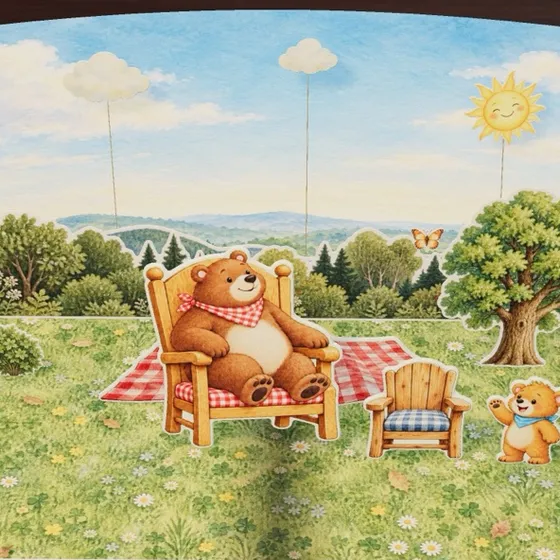
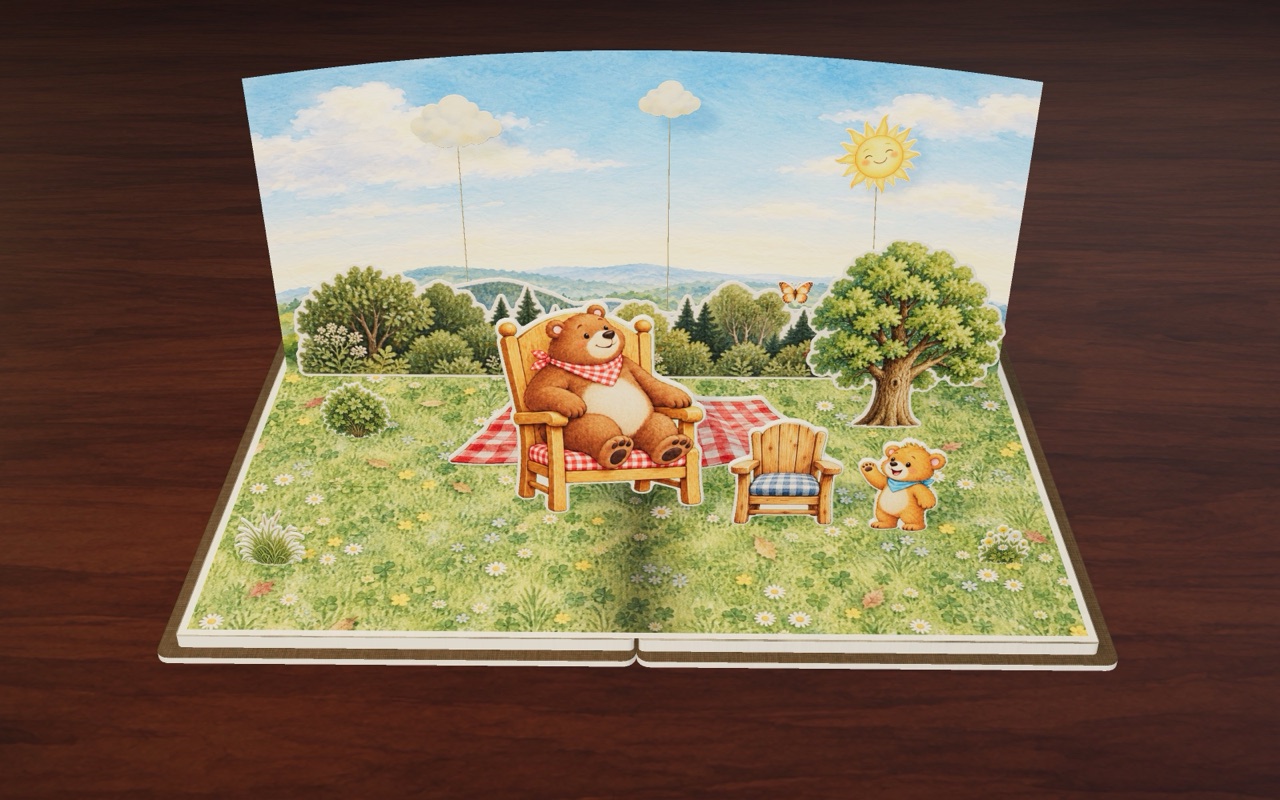
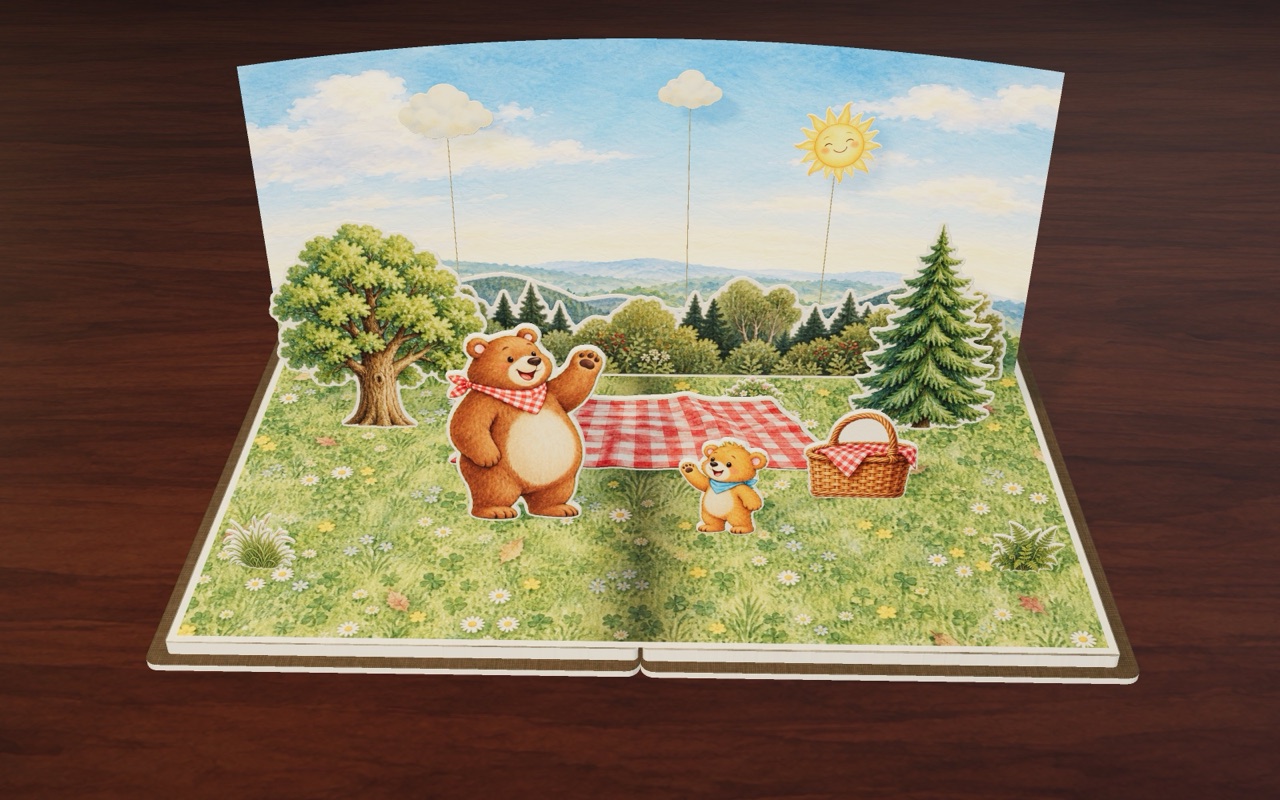
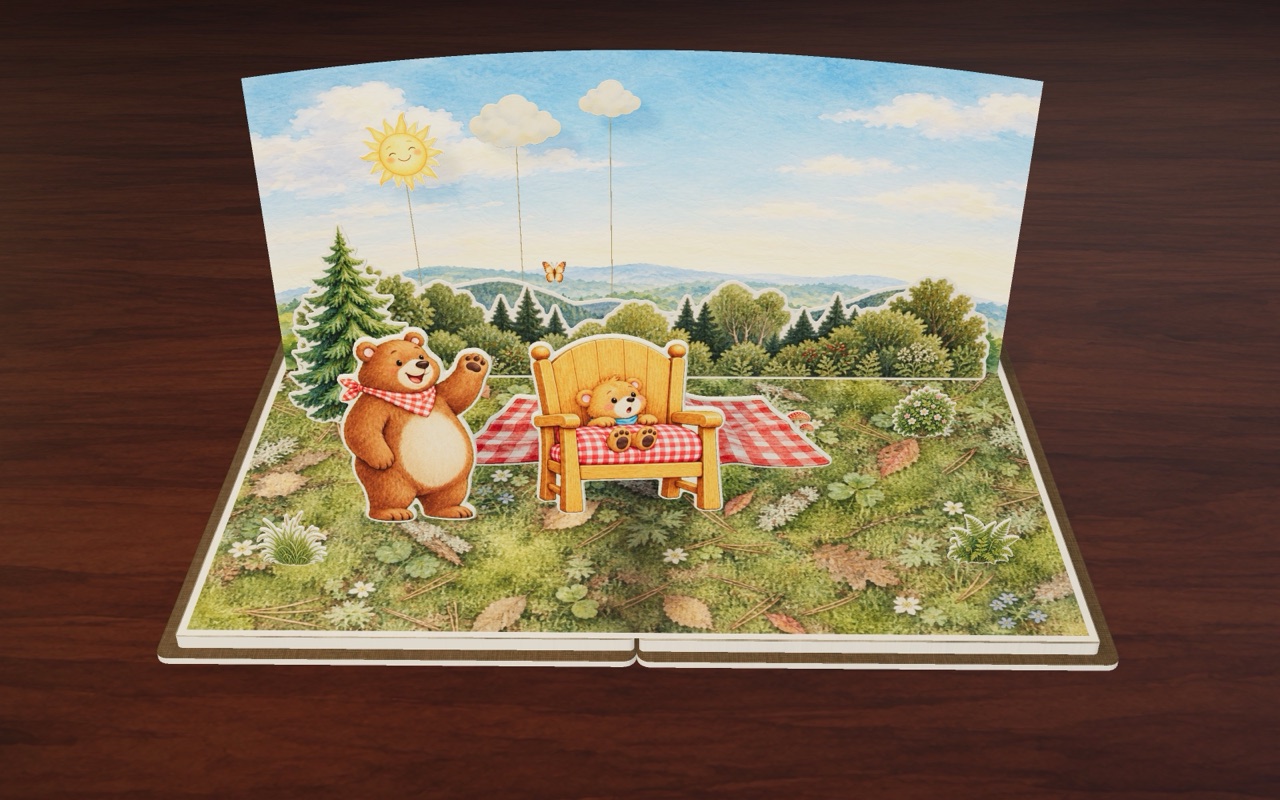
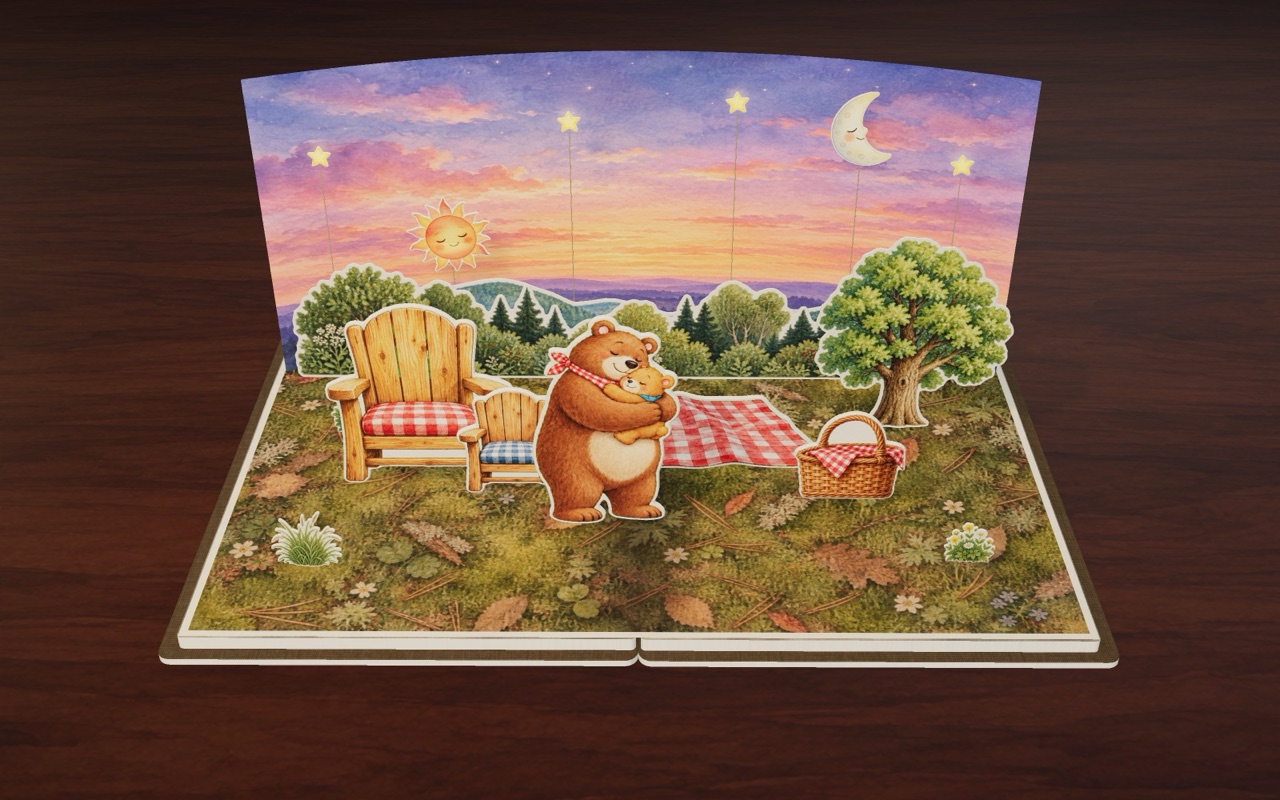
Big Bear and Small Bear have a picnic in a sunny forest. Big Bear has a big chair, and Small Bear has a small chair. Big Bear has a big cup, and Small Bear has a small cup. Then Small Bear climbs into the big chair. Uh-oh! It is too big. So Big Bear lifts Small Bear up, and at sunset there is a big hug and a small hug.
The two new words
Large, much more than the other one. It comes up 11 times (Big Bear’s name counts too), and every time something big puffs up on the page: Big Bear, the big chair, the big cup, the big ball and the big honey pot.
Little, much less than the other one. It comes up 11 times, and every time something small shrinks down with a squeak: Small Bear, the small chair, the small cup, the small ball and the small honey pot.
Made for children just starting kindergarten. Each page has one short sentence (3 to 6 words) in one pattern: “Big Bear has a big cup.” / “Small Bear has a small cup.” Only one word changes, so a child can say the page with you by the third spread. The two things are always side by side, so the picture shows what big and small mean. Every other word is one a 4-year-old already knows, like bear, chair, cup, ball, hug and night.
Questions to ask while you read
Pause after each spread and ask one question. There are no right answers; the point is to get your child talking.
- 1Which bear is big? Which bear is small?
- 2Point to the big chair. Who sits in it?
- 3Which chair is small? Is it just right for Small Bear?
- 4Show me with your hands: how big is Big Bear’s cup?
- 5Is Small Bear’s cup big or small?
- 6Which ball bounces higher, the big one or the small one?
- 7Uh-oh! Why is the big chair too big for Small Bear?
- 8How does Big Bear help Small Bear?
- 9Tap a thing. Is it big or small?
- 10Give someone a big hug. Now a small hug!
Tips for parents
- First time: use Read to me and just enjoy the pictures together. It takes about a minute and a half.
- Act the words: stretch your arms wide on “big”, curl up tiny on “small”.
- Read it again and pause before the last word of each page, so your child can say “big” or “small”.
- Around the house, find a big one and a small one: shoes, spoons, cups, books.