 Rex Can Tiptoe
Rex Can Tiptoe
by ReadRead · 5 min readRex loves to stomp, but the eggs in the nest are sleeping. A dinosaur story about big feet, soft steps, and fixing a mistake.
How would you like to read it?
Read it freeInside the book
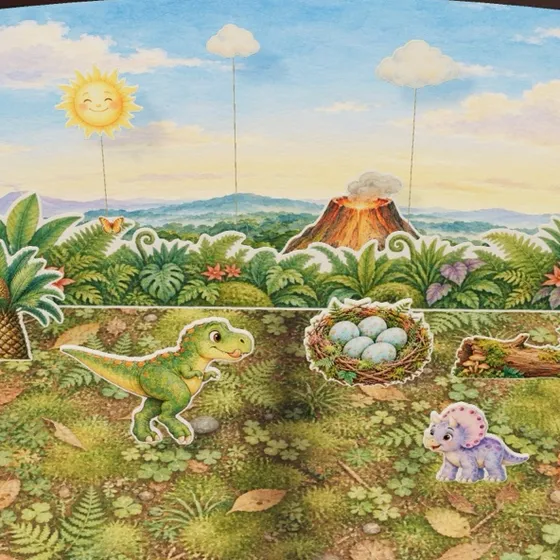
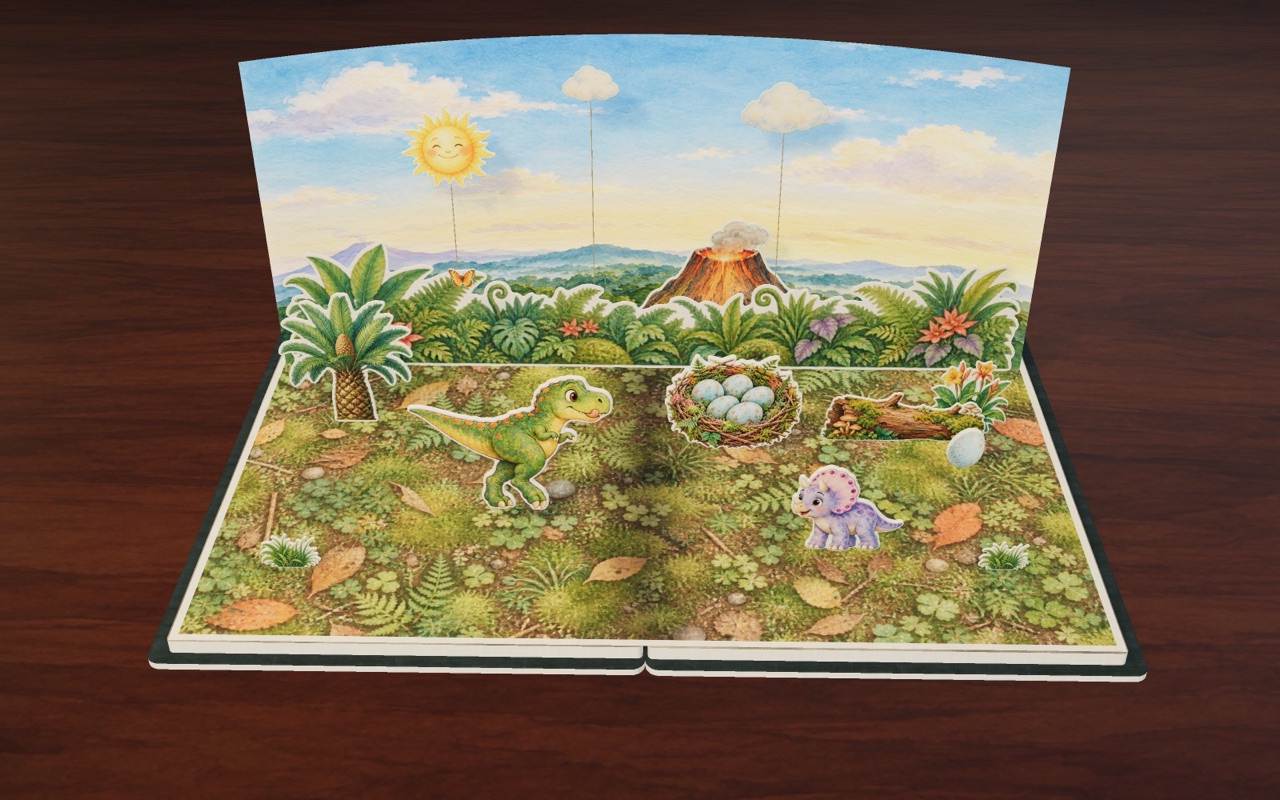
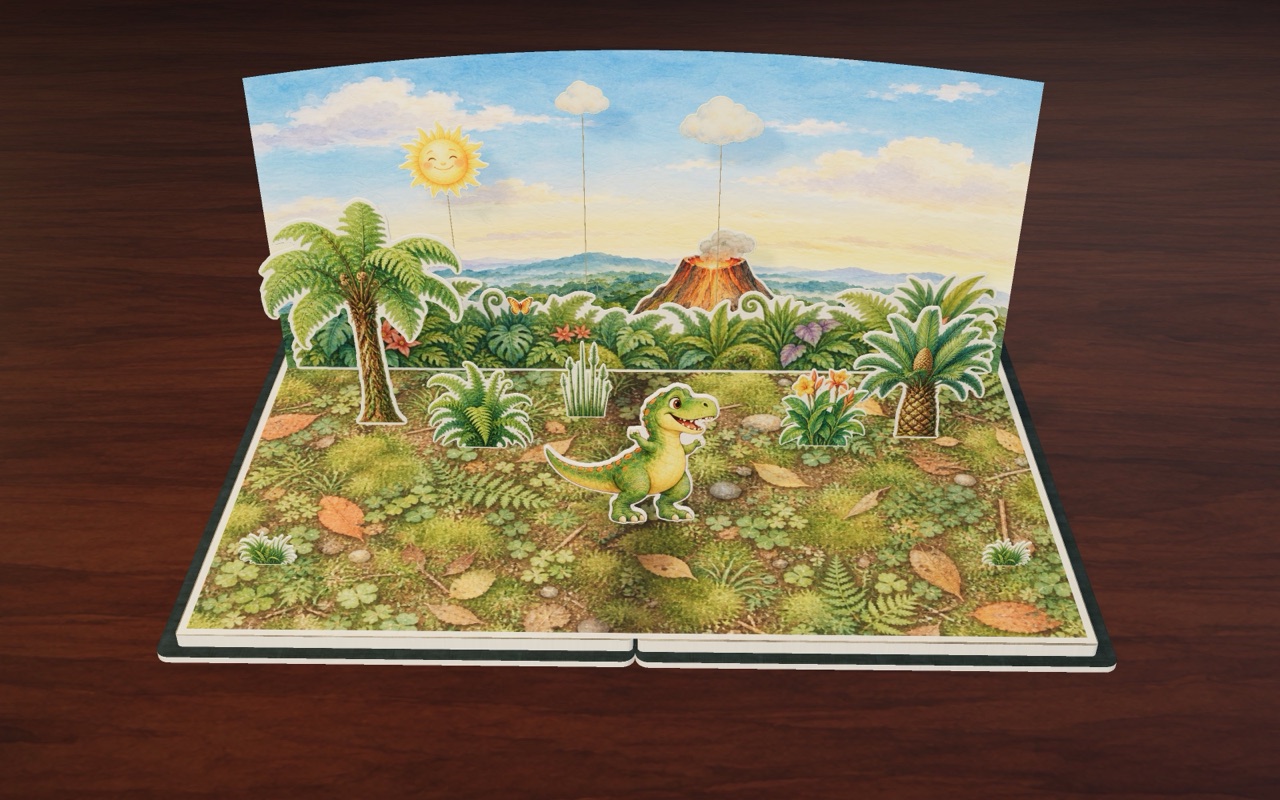
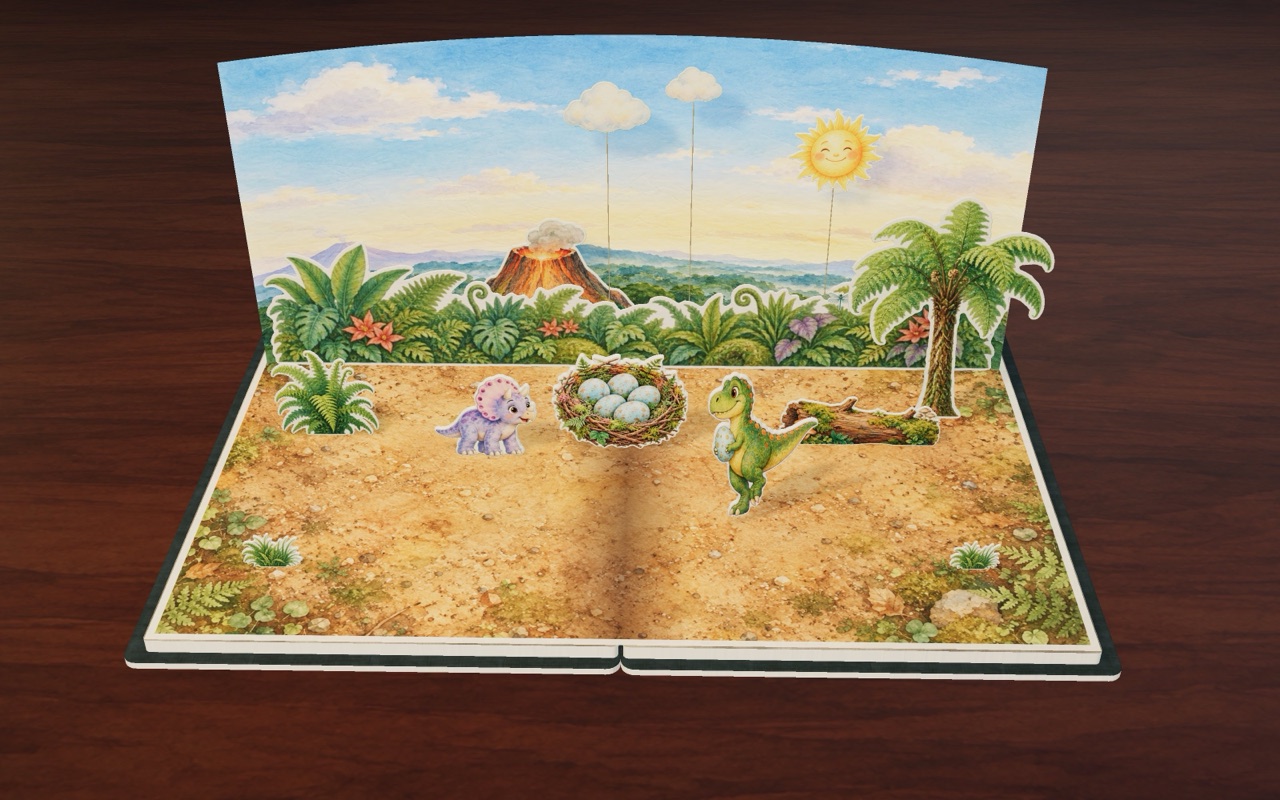
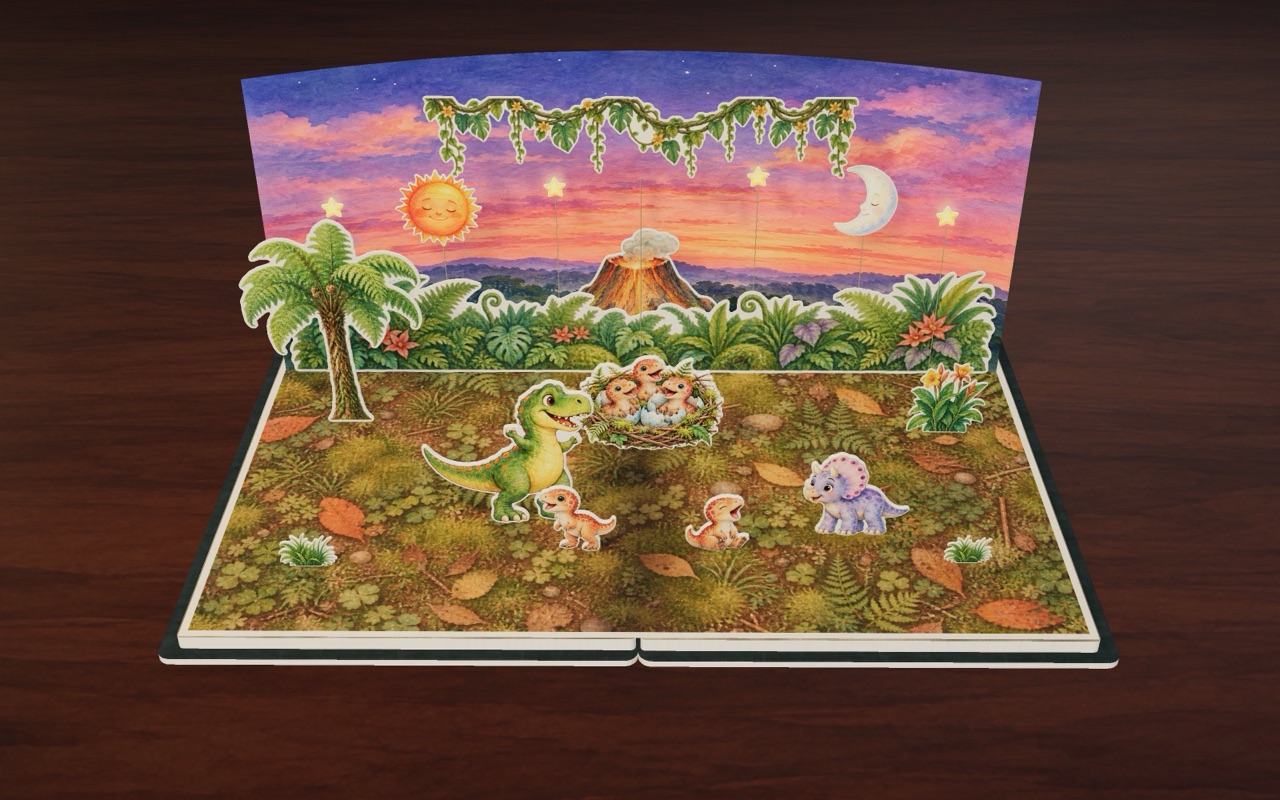
Rex is a big green dinosaur who lives in a jungle of ferns by a smoky volcano, and he loves to stomp. Then his friend Dot shows him a soft nest of sleeping eggs. Rex’s big feet go stomp, stomp, and one little egg rolls away. Dot shows him a new way to walk, and Rex has an egg to bring home.
The two new words
To put your foot down hard and loud. It comes up 8 times, and every time Rex lifts a big foot and the whole paper page jumps.
To walk softly on the tips of your toes. It comes up 8 times: Dot shows it, Rex tries it, and then Rex tiptoes past the nest with the lost egg.
The two words are opposites, so every page shows one against the other: loud and big, or soft and slow. A refrain comes back (“Tiptoe, tiptoe” and “Rex can tiptoe!”) so a child can join in. Every other word is a common word, like egg, nest, tail, rock and mud.
Questions to ask while you read
Pause after each spread and ask one question. There are no right answers; the point is to get your child talking.
- 1What does Rex love to do? Can you stomp like Rex?
- 2Why does the little lizard run away?
- 3What do you think Dot found?
- 4Why must Rex and Dot be quiet by the nest?
- 5What happened to the little egg? How does Rex feel?
- 6How does Dot walk? Can you tiptoe like Dot?
- 7Rex wobbles. What helps him not fall down?
- 8How does Rex bring the lost egg back?
- 9Tap the stones and the mud: when should Rex tiptoe, and when can he stomp?
- 10When is it good to be loud, and when is it good to be quiet?
Tips for parents
- First time: use Read to me and let your child just listen and watch.
- Act the words out together: stomp across the room, then tiptoe back past a “sleeping” toy.
- On page five, stop and ask “What can Rex do now?” before you turn the page.
- On the game page, let your child say the word before they tap: “Tiptoe!” for a stone, “Stomp!” for the mud.