 Puddle Jump
Puddle Jump
by ReadRead · 5 min readDrip, drip, then it pours! Mei and Ducky jump in every puddle, then help a little snail get home across the biggest one.
How would you like to read it?
Read it freeInside the book
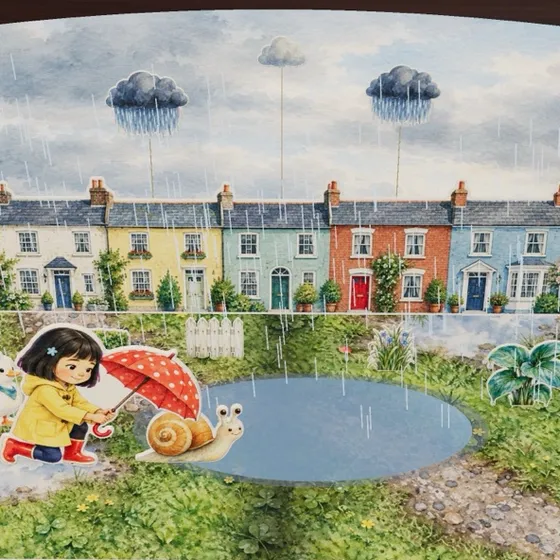
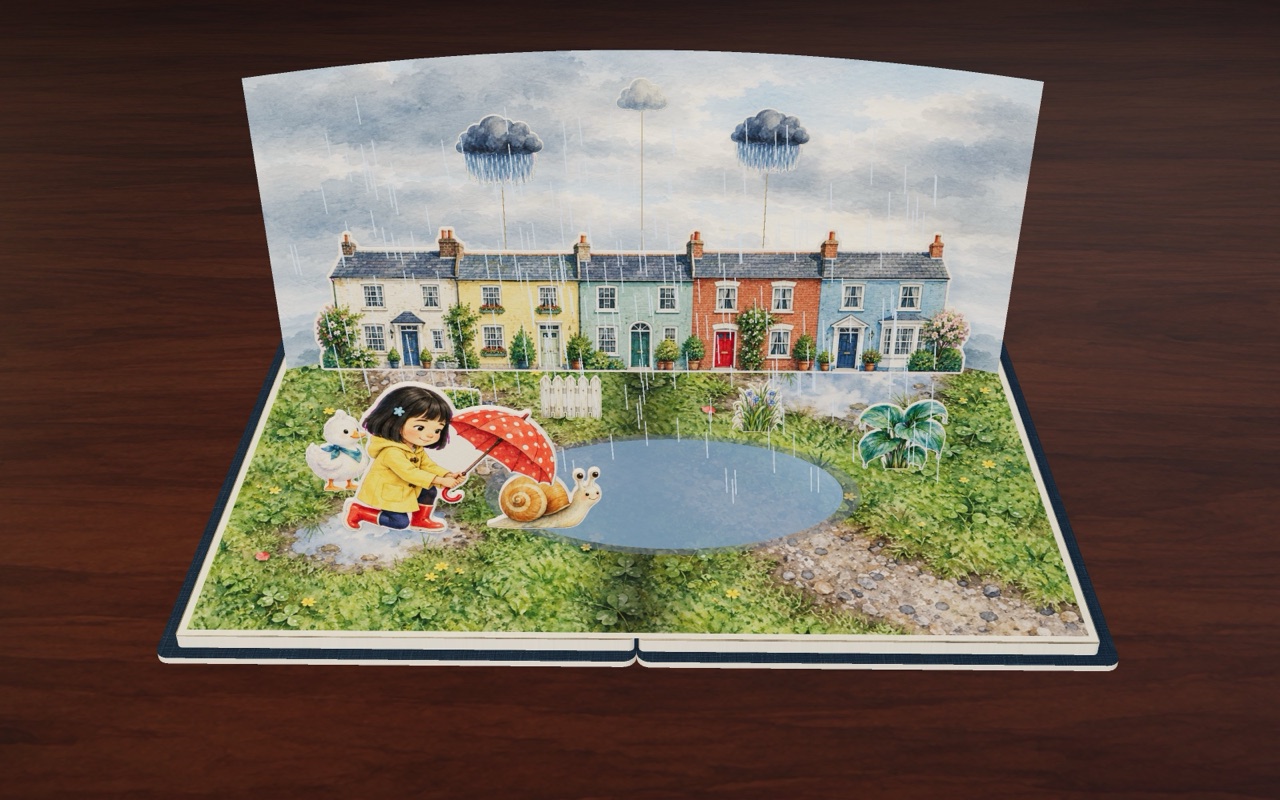
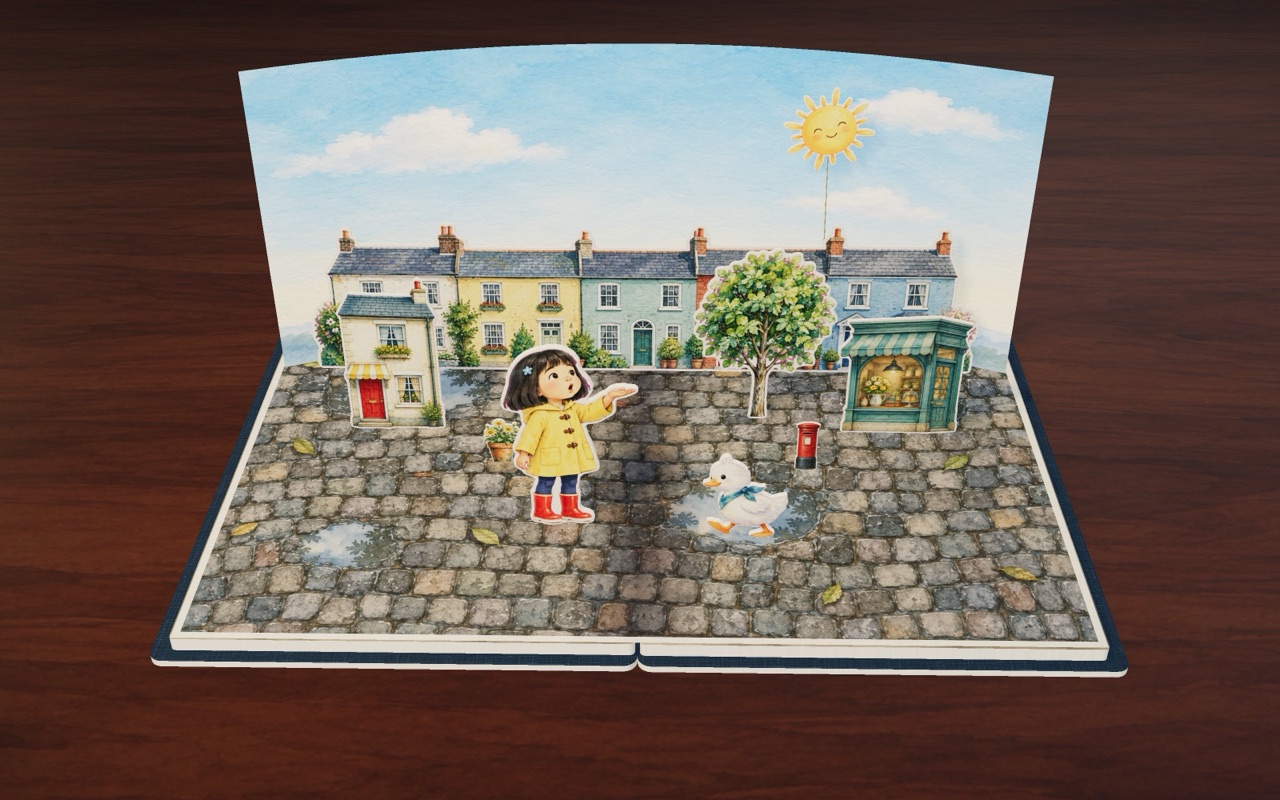
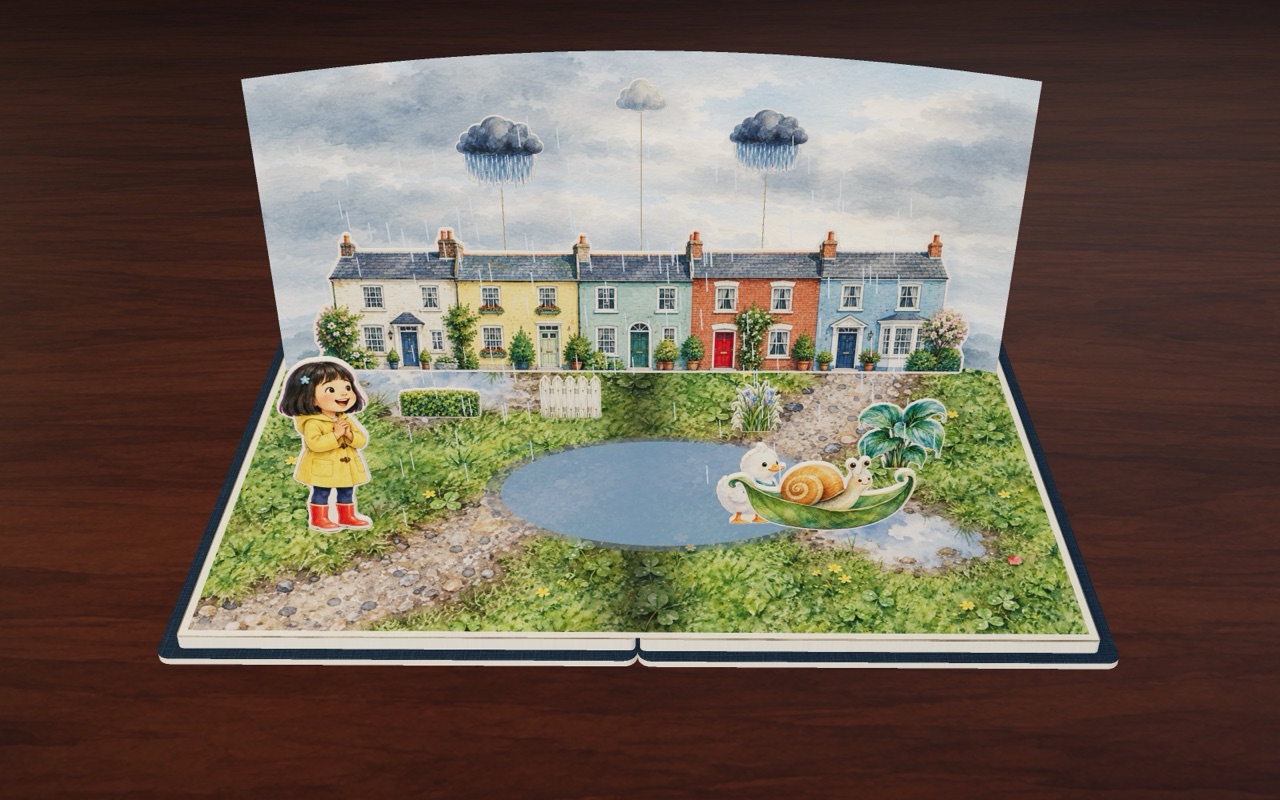
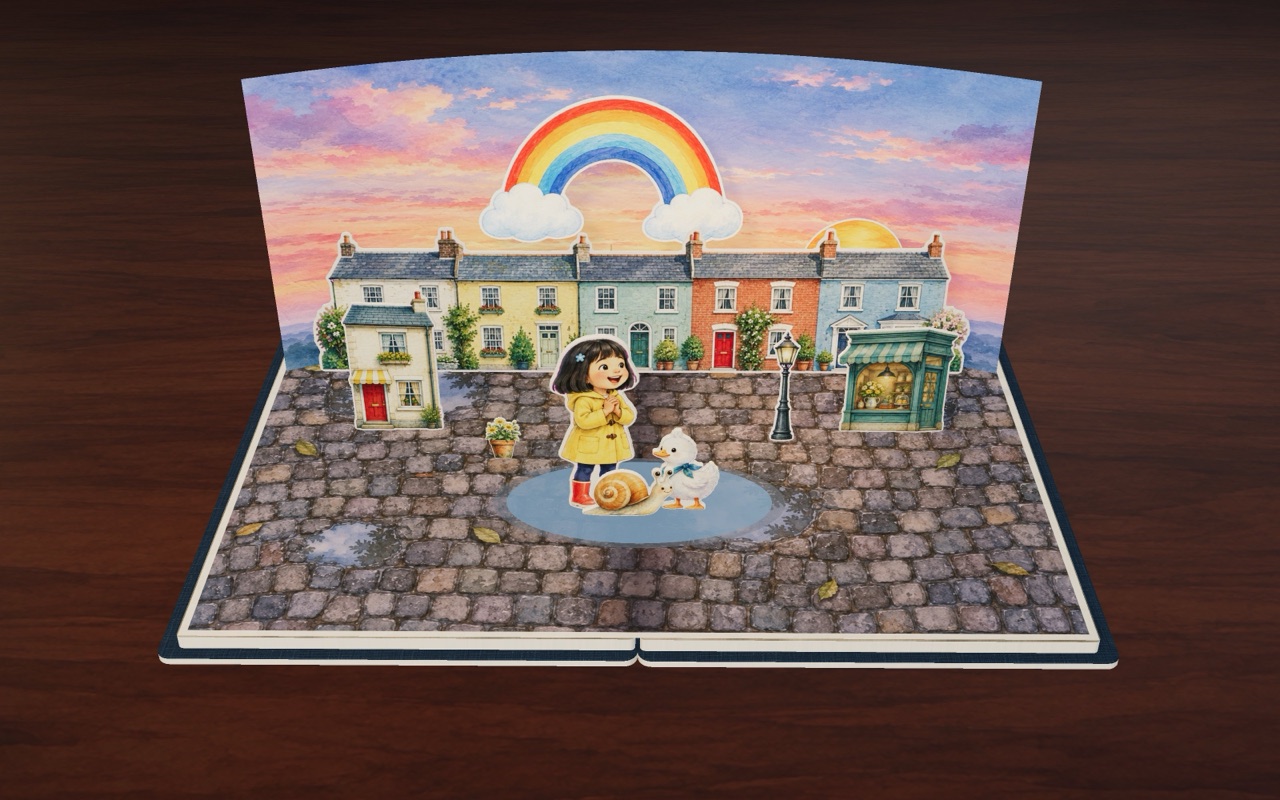
Mei has new red boots for jumping in puddles, but the sun is out and the street is dry. Then grey clouds come. Drip! A drop lands on her nose. Soon the rain pours, and Mei and Ducky the duck jump in every puddle. But Shelly the snail is stuck by a big puddle and cannot get home.
The two new words
When water falls one little drop at a time. It comes up 8 times, and every time a single drop falls: from a cloud onto Mei’s nose, from her umbrella, from wet leaves.
When a lot of water comes down fast, all at once. It comes up 8 times: the rain on the roofs, the drainpipe, a bucket and a watering can.
The text repeats on purpose (“Jump, splash, jump!” comes back three times), so a child can say it along. There is one small problem to solve: how can a tiny snail get over a big puddle? Every other word is a common word, like rain, boots, street, leaf and home.
Questions to ask while you read
Pause after each spread and ask one question. There are no right answers; the point is to get your child talking.
- 1Why is Mei sad? What does she want?
- 2What falls on Mei’s nose?
- 3Where does the rain pour? Can you find the pipe?
- 4Which puddle would you jump in first?
- 5Who is by the big puddle? What is her problem?
- 6How does Mei help Shelly stay dry?
- 7How do they get Shelly across the puddle?
- 8The rain stops. What can still drip?
- 9Tap and see: what drips and what pours?
- 10What do you like to do on a rainy day?
Tips for parents
- First time: use Read to me and let your child just listen and watch.
- Show the difference with your hands: one finger tapping for “drip”, both hands falling fast for “pour”.
- Before page seven, stop and ask: “How can Shelly get over the big puddle?” Let your child think of a plan.
- At bath time or in the garden, drip water from a sponge and pour it from a cup. “Is it a drip or a pour?”